Why Material Choice Matters
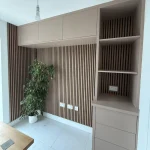
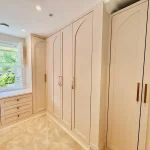
In bespoke carpentry, the choice of material is every bit as important as the design itself. The wood or surface you select will influence not only how something looks on the day it is installed, but how it feels to live with and how it ages over time. From bespoke fitted wardrobes in Kent and media walls, to outdoor kitchens and dining tables, the right timber can make the difference between a project that simply works and one that becomes a real feature of the home.
At Leechcroft Carpentry, we spend a great deal of time considering materials at the outset. While there are reliable engineered boards for painted cabinetry, there are also opportunities to work with hardwoods, specialist timbers and natural finishes that elevate a project and give it real individuality.
When MDF Comes Into Its Own
If a project is destined to be painted, MDF (medium-density fibreboard) is often the most practical option. It is strong, stable and predictable to work with, making it ideal for complex cabinetry where accuracy matters. It can be filled and sanded as many times as needed, which is a real advantage when working in homes with awkward angles or older properties where walls and floors are rarely level.
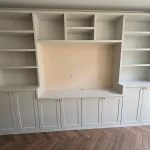
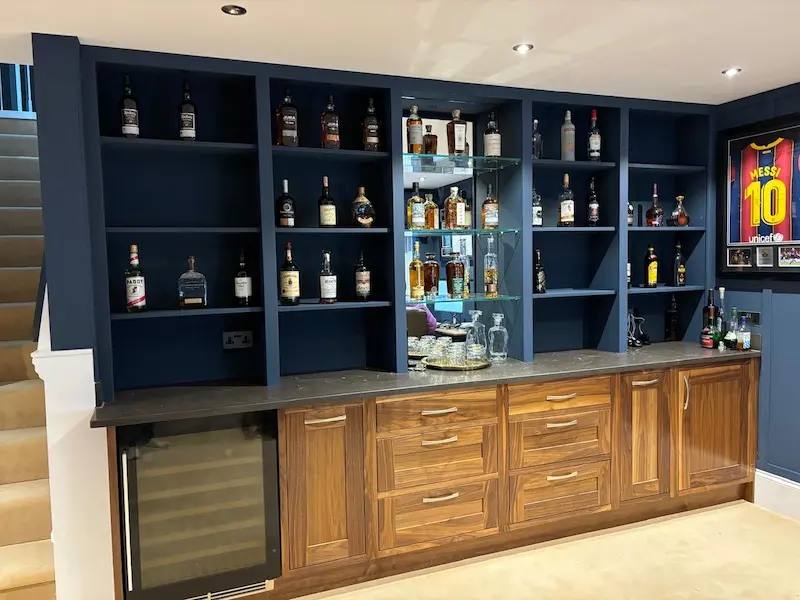
That said, MDF on its own is rarely the final word. Once painted in a premium finish such as Farrow & Ball, it becomes something quite different: crisp, refined and tailored to the room it belongs in. Many of our built-in projects begin this way, with a robust MDF framework that is then transformed through colour and detailing.
Bringing Character with Surfaces and Worktops
For clients who want something more distinctive, the material choice often shifts to surfaces. Even simple cabinetry can be elevated with the right top: a solid oak worktop to bring warmth, a slab of slate or marble to add depth, or even a concrete surface in an outdoor setting where durability is key. Composite worktops also have their place, offering consistency and a wide range of finishes. These decisions often come down to lifestyle as well as aesthetics, and what suits the way a space is going to be used day to day.
The Enduring Appeal of Natural Timber
Nothing quite matches the natural beauty of real wood. Unfortunately, what is widely available through DIY stores or standard merchants is often fast-grown timber, produced to meet demand rather than character. You can see it in the growth rings: wide, loose patterns that do not carry the same density or strength as older, slower-grown species. Compare it with an antique piece of oak furniture and the difference is obvious.
That is not to say fast-grown timber has no use, but for clients who want richness of colour, tighter grain and lasting stability, sourcing better quality hardwoods is essential. These are not the kind of boards you will find stacked in a warehouse; they need to be sought out from the right suppliers.

Looking Beyond the Standard Merchant
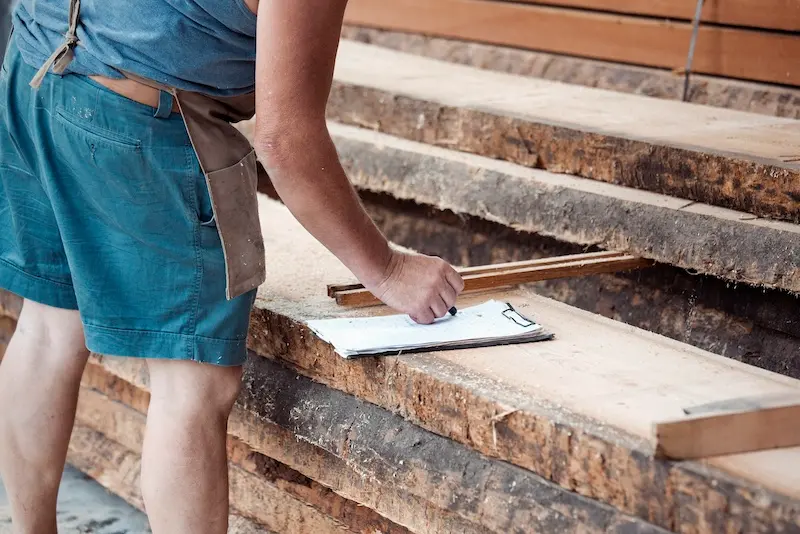
Local sawmills often provide far more variety and the chance to order in timbers you simply will not find elsewhere. Exotic hardwoods such as Iroko are popular for outdoor carpentry thanks to their durability and resistance to the elements. Walnut offers a deep, dark grain that suits modern interiors, while ash provides a lighter, more contemporary look without losing strength.
This is also where clients can explore options such as live-edge slabs or unusually wide boards, which allow us to create something completely individual rather than working to standard sizes.
Finding Something Truly Unique
Some of the most memorable projects come from working with specialist timber millers. These are often small, independent operators, sometimes tree surgeons or felling contractors, who convert timber themselves. The result is access to pieces of wood that carry a real sense of history: oak with all the knots and scars of age, spalted beech with its dark, dramatic lines, or elm burr with its swirling, almost marbled patterns.
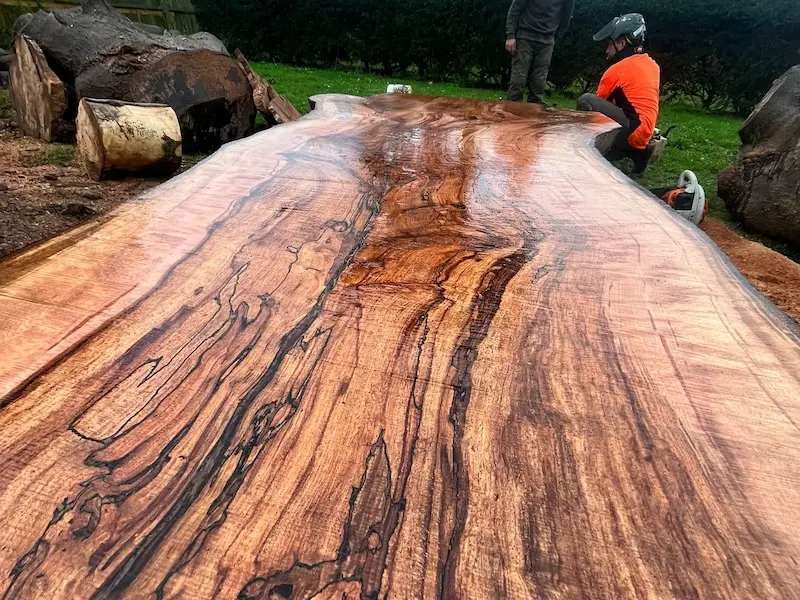
These are not production timbers grown quickly to supply the market. They are old trees, felled for natural reasons, milled with care and full of the quirks that make furniture and cabinetry truly unique.
A good place to find local independent operators is Sawmillers.
Milling Timber from Your Own Property
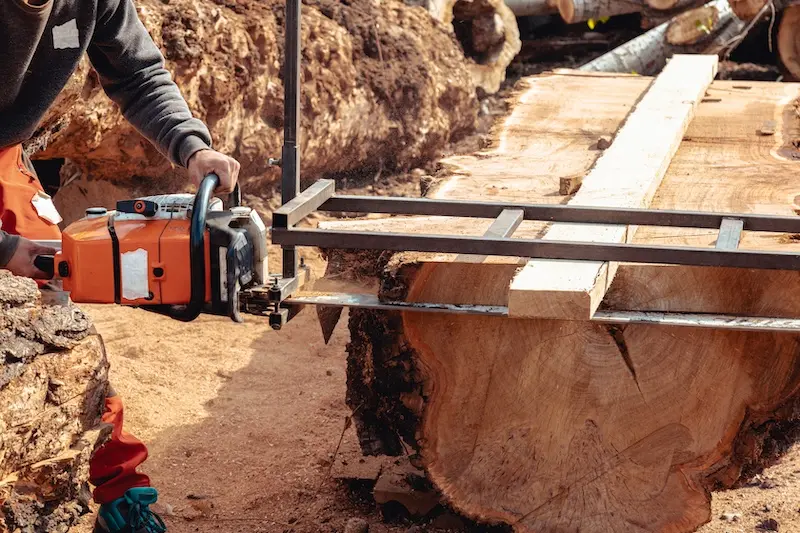
Occasionally there is an opportunity to take this one step further. If a large tree has to be removed from a property, it can sometimes be milled on site using portable equipment and then converted into something that stays with the home. The timber from that tree might become a dining table, a cabinet or even floorboards, creating a piece that is not just practical but deeply personal. It is a way of keeping a memory alive and turning it into something you live with every day.
Final Thoughts
The materials we work with are just as important as the craftsmanship that shapes them. MDF remains a trusted choice for painted cabinetry, but for clients who want richness, longevity and individuality, hardwoods and specialist timbers are where a project really comes to life.
At Leechcroft Carpentry, we take pride in sourcing the right materials for every commission, ensuring that each piece we create reflects not only our craftsmanship but also the quality and character of the wood it is built from.