Contemporary furniture. It’s a term you’ll encounter regularly when browsing furniture websites, looking through interior design magazines or planning improvements to your home. But what does it actually mean?
You might assume contemporary furniture simply means modern furniture, and you wouldn’t be alone. The two terms are frequently used interchangeably, even though they describe different approaches to design.
The simplest explanation is that contemporary furniture reflects the styles and design preferences of the present day. Unlike traditional or modern furniture, which are associated with particular historical periods, contemporary design continues to evolve.
That makes it an interesting choice for homeowners, particularly in new-builds. Rather than following a rigid set of rules, contemporary furniture offers the freedom to combine different materials, finishes and design influences to create something that feels current, comfortable and personal.
What Makes Furniture Contemporary?
There’s no single feature that automatically makes a piece of furniture contemporary. However, there are certain characteristics commonly associated with contemporary interiors.
Clean lines, simple shapes and uncluttered surfaces are particularly popular. Rather than elaborate carvings, heavy mouldings or decorative details, contemporary furniture often allows its proportions, materials and craftsmanship to do the talking.
Colour also plays an important role. Soft neutrals, warm greys, muted greens and natural wood tones are frequently used to create a calm, balanced interior. These can be complemented by darker finishes, contrasting textures or more adventurous colours.
Materials are equally varied. Natural timber, painted cabinetry, glass, metal and textured or acoustic wall panels can all feature in contemporary furniture, sometimes within the same installation.
Above all, contemporary furniture should be practical. A beautiful piece of furniture that doesn’t work for the people using it has missed an important part of the brief.

Contemporary vs Modern Furniture: What’s the Difference?
This is where much of the confusion comes from.
Although the words sound similar, modern furniture refers to a particular design movement that emerged during the early 20th century.
Modernist designers moved away from the elaborate decoration associated with earlier furniture styles. Instead, they embraced simplicity, functionality, clean lines and materials suited to new manufacturing techniques.
Designers such as Charles and Ray Eames, Marcel Breuer and Le Corbusier helped establish an approach that continues to influence furniture design today.
Contemporary furniture, on the other hand, isn’t tied to a particular period.
It describes furniture that reflects current design thinking, which means its appearance can change as tastes and lifestyles evolve.
A contemporary living room might feature a mid-century modern chair alongside a bespoke media wall, natural oak shelving and acoustic timber panelling. Individually, these elements draw inspiration from different periods, but together they create an interior that feels appropriate for today.
In short, modern furniture belongs to a recognised design movement. Contemporary furniture reflects the present.
How Does Contemporary Furniture Look in a Real Home?
It’s easier to understand contemporary design when you see how it works in everyday living spaces.
Contemporary Media Walls
Media walls are a good example of how furniture design has adapted to modern lifestyles.
Televisions have become larger, living spaces increasingly serve several purposes, and homeowners want practical storage without filling their rooms with separate pieces of furniture.
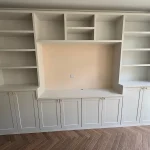
A contemporary media wall might combine a recessed television area with concealed cupboards, open shelving, integrated lighting and natural timber detailing.
The overall appearance is often deliberately simple, with clean lines and carefully balanced proportions.
At Leechcroft Carpentry, we design bespoke media walls around the dimensions of each room and the requirements of the homeowner. This allows us to incorporate everything from hidden cable management to additional storage and television recesses designed to accommodate future upgrades.
The result is furniture that feels like part of the room rather than something added afterwards.

Get design inspiration for media walls >
Contemporary Fitted Wardrobes
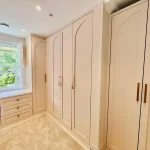
Contemporary fitted bedroom furniture often focuses on creating a calm, uncluttered environment.
Floor-to-ceiling wardrobes, integrated drawers and concealed storage help reduce the need for additional furniture, leaving more usable floor space.
Door styles can range from completely flat, handleless designs to subtle recessed panels, while finishes might include painted surfaces, natural timber or a combination of both.
Internally, contemporary wardrobes can be surprisingly sophisticated, incorporating pull-down hanging rails, adjustable shelving, shoe storage and compartments designed around the owner’s belongings.
It’s this combination of appearance and functionality that makes contemporary fitted furniture particularly appealing.
Contemporary Home Offices
Made to measure home offices have become an important part of residential design, and contemporary furniture is particularly well suited to creating practical working environments.
Bespoke desks, overhead cabinetry, integrated shelving and concealed storage can transform a spare bedroom or unused corner into a dedicated workspace.
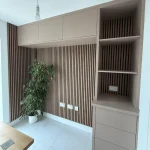
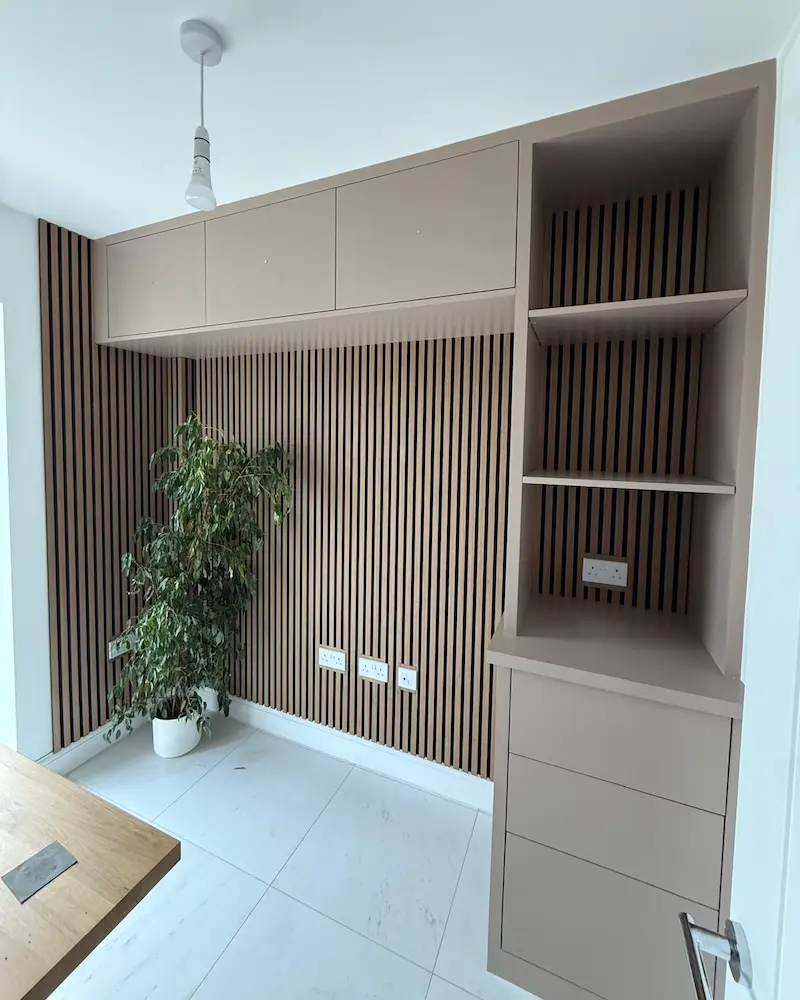
Our recent home office project in Ebbsfleet Valley demonstrates this approach. The furniture was designed around the client’s existing desk, combining fitted storage with acoustic slat wall panelling and cabinetry finished in Farrow & Ball Tack Room Door.
An existing downpipe was carefully incorporated into the panelling, using the vertical slats and recessed gaps to make it considerably less noticeable.
It’s a small detail, but one that demonstrates how thoughtful contemporary design can address practical challenges without compromising the overall appearance.
Does Contemporary Furniture Have to Be Minimalist?
Not at all.
Minimalism has certainly influenced contemporary furniture, but the two aren’t the same thing.
Minimalist design generally seeks to reduce a space to its essential elements, removing unnecessary decoration and visual clutter.
Contemporary furniture can embrace those principles without following them exclusively.
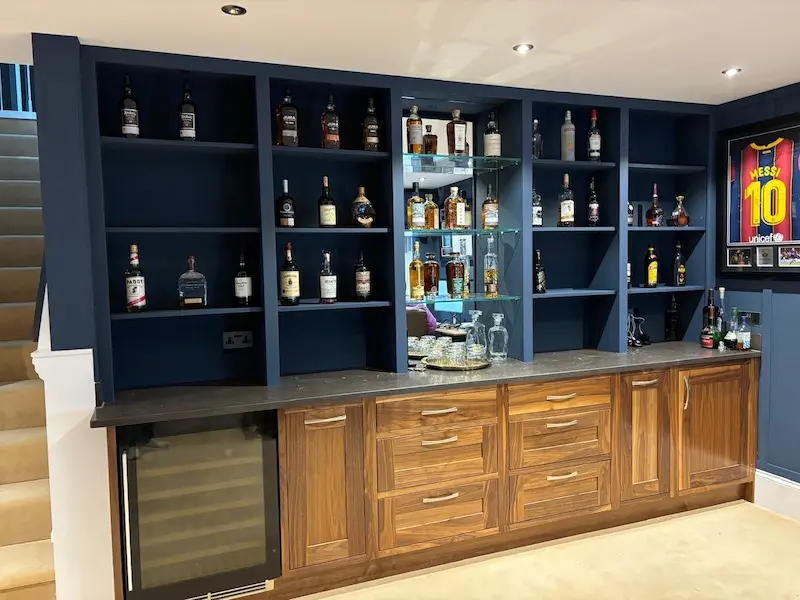
A contemporary room might feature richly coloured cabinetry, a dramatic live-edge timber top, decorative brass handles or a statement piece of furniture.
Curved furniture, textured finishes and traditional detailing can also work beautifully within a contemporary interior.
In fact, some of the most interesting contemporary spaces combine old and new.
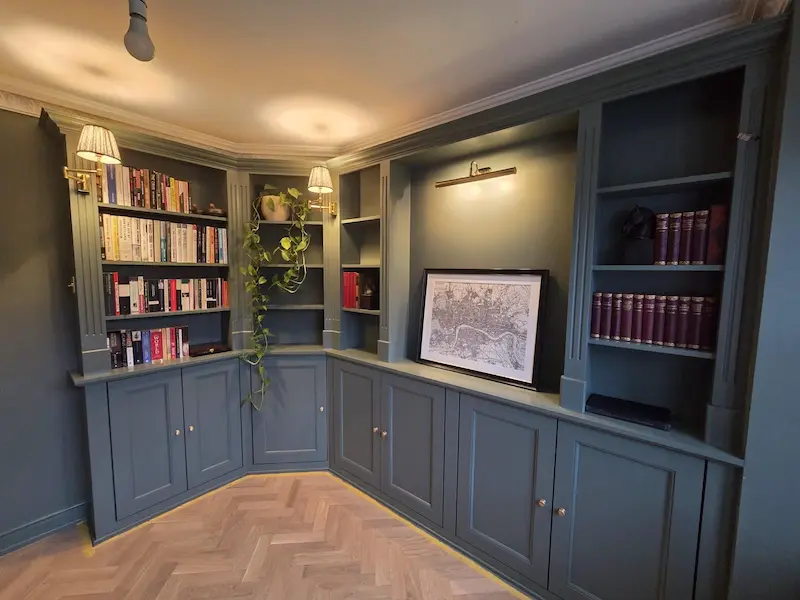
A period property might retain its original fireplace, cornicing and architectural features while introducing contemporary fitted cabinetry on either side. The contrast can enhance the character of the room rather than detract from it.
The important consideration is how the different elements work together.

Can Contemporary Furniture Work in a Traditional Home?
Absolutely, and this is something homeowners are sometimes unnecessarily cautious about.
Living in a Victorian, Edwardian or other period property doesn’t mean every piece of furniture needs to reflect the age of the building.
Contemporary furniture can provide a striking contrast to traditional architecture, particularly when the design respects the proportions and existing features of the room.
For example, simple painted alcove cabinetry can sit comfortably alongside an ornate fireplace. Contemporary fitted wardrobes can introduce practical storage into a bedroom with traditional cornicing, while natural timber shelving can bring warmth to an otherwise formal interior.
The key is balance.
Rather than attempting to disguise the original character of a property, well-designed contemporary furniture can complement it.
The Difference Bespoke Furniture Makes
One of the advantages of contemporary design is its flexibility, and this is where genuinely bespoke furniture comes into its own.
When choosing furniture from a standard range, your options are generally limited to the manufacturer’s available dimensions, finishes and configurations.
Even furniture marketed as made to measure may rely on standard cabinet sizes, with additional panels and fillers used to accommodate the dimensions of the room.
There’s nothing inherently wrong with this approach, and it can be perfectly suitable for many homes. However, it does place restrictions on what can be achieved.
Read our aticle on what you need to know before buying fitted furniture >
Truly bespoke furniture starts with the room and the customer’s requirements, not a catalogue of predetermined components.
At Leechcroft Carpentry, every project is designed from scratch.
If a homeowner wants a media wall with asymmetrical shelving, a curved cabinet, a particular timber finish or an unusual combination of storage features, the design can be developed around those requirements.
The same applies to contemporary wardrobes, home offices, window seating and other fitted furniture.
There are no standard cabinet dimensions dictating the design, allowing us to make the most of the available space while achieving the appearance the customer wants.
And because each piece is individually designed, contemporary furniture doesn’t have to look like something you’ve seen in a showroom.
It can be entirely your own.
Will Contemporary Furniture Go Out of Fashion?
It’s a fair question, particularly when you’re investing in bespoke furniture that you hope to enjoy for decades.
Contemporary design is constantly evolving, and there’s no guarantee that today’s popular features will remain fashionable. Take media walls, for example. With technology advancing at such a pace, will we even want a large television dominating our living rooms in ten or fifteen years? Perhaps we’ll be watching films on something entirely different.
However, one of the advantages of contemporary furniture is its relative simplicity. Unlike the heavily carved and ornate furniture of previous centuries, contemporary cabinetry tends to favour clean lines, balanced proportions and understated detailing. It’s less likely to make an overwhelming statement that immediately identifies it with a particular era.
In many cases, it’s the decorative features surrounding the furniture that are more likely to date than the furniture itself.
Acoustic slat panelling is a perfect example. It’s incredibly popular at the moment, and we regularly incorporate it into our projects. But will it be quite so desirable in twenty years? Who knows. Fortunately, replacing decorative panelling is a relatively straightforward job compared with removing an entire wall of beautifully crafted fitted cabinetry.
Colour is another consideration. Certain shades inevitably come in and out of fashion, but this is where traditionally finished, hand-painted furniture has a significant advantage.
At Leechcroft Carpentry, much of our bespoke cabinetry is finished in carefully selected paint colours, including those from Farrow & Ball. If your tastes change in ten years, the furniture can be prepared and repainted in an entirely different shade without replacing the underlying cabinetry.
That’s not always so straightforward with mass-produced furniture. Many factory-manufactured units have exceptionally smooth, hard-wearing laminate or lacquered finishes which, although attractive, can be considerably more difficult to repaint successfully. Specialist preparation and coatings may be required, and the results aren’t always as predictable as repainting furniture originally designed for a painted finish.
Of course, no furniture is completely immune to changing tastes, and even the most carefully considered design may eventually feel dated.
But by investing in quality craftsmanship, sensible proportions and furniture that can be adapted or refreshed, you’re giving yourself far more options for the future.
The furniture itself doesn’t necessarily need to change every time your tastes do. Sometimes a fresh coat of paint and a few updated details are all it takes to make a room feel new again.
Contemporary Furniture Designed Around Your Home
Contemporary furniture isn’t a rigid style with a list of rules to follow. It’s an evolving approach to design that reflects how people want their homes to look and function today.
For some homeowners, that means simple, understated cabinetry in soft neutral colours. For others, it might involve bold finishes, unique timber or a striking architectural feature.
Neither approach is more contemporary than the other.
At Leechcroft Carpentry, we design and handcraft bespoke furniture for homes throughout Kent and South East London, combining traditional joinery skills with contemporary design and practical solutions.
Whether you’re considering a fitted media wall, bespoke wardrobes, a home office or something entirely different, we can help turn your ideas into furniture designed specifically for your home.
Because when furniture is truly bespoke, your imagination doesn’t have to be restricted by what’s available in a catalogue.